Visual testing for AI coding agents: give your agent eyes
AI coding agents write UI code they cannot see. Learn how visual testing lets agents verify AI-generated UI changes on every PR, with real CLI workflows.

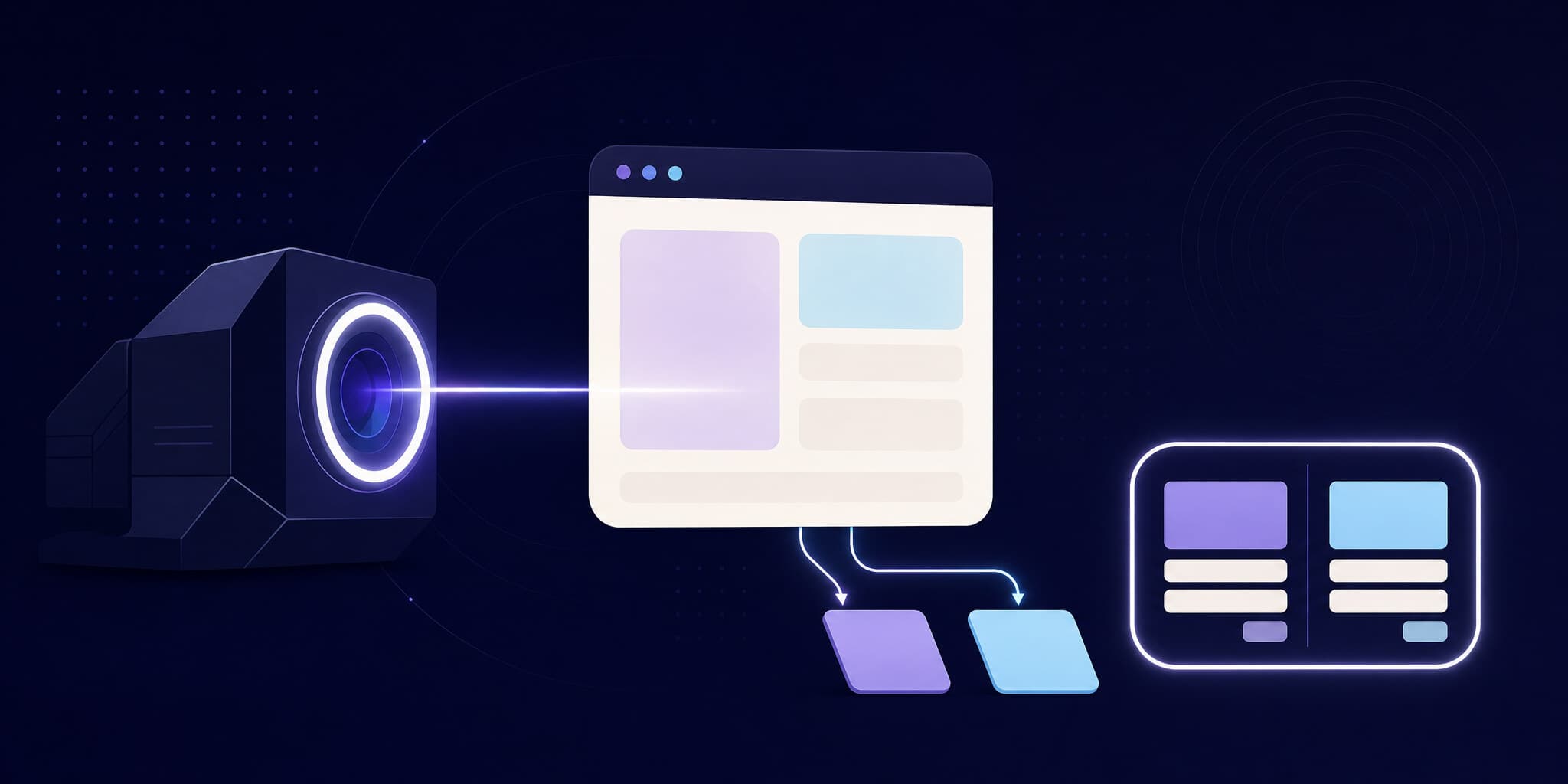
AI coding agents like Claude Code, Cursor, and Codex now write a large share of frontend code, but they ship it blind: they never render the page they just changed. Visual testing closes that loop. Deterministic screenshots captured on every pull request become the agent's eyes and the human's safety net: the agent opens a PR, CI captures screenshots, a tool like Argos diffs them against the baseline, and the agent inspects the diffs, fixes its own regressions, or submits a review.
Agents write the UI. They never see it.
Here is the uncomfortable truth about the 2026 development workflow: the entity writing most of your CSS has never rendered your app.
A coding agent works on text. It reads your components, your stylesheets, your tests, and it edits them with remarkable competence. Then it runs your test suite, sees green, and opens a pull request. At no point in that loop did anything look at the page. The agent's confidence is built entirely on signals that were designed for a different era, when a human would eyeball the change in a browser before pushing.
That eyeballing step is exactly what disappears when you delegate UI work to an agent. You prompt "make the sidebar collapsible," the agent delivers a working toggle, the unit tests pass, and three days later someone notices the sidebar now overlaps the footer on the settings page. The agent touched a shared flex container. Nothing it could observe told it that was a problem.
This is not an argument against coding agents. It is an argument that the verification layer has to change when the author changes. Humans compensated for weak visual coverage with their own eyes. Agents cannot, so the pipeline has to see for them.
Why do functional tests miss AI-generated UI bugs?
Functional tests assert behavior: the button exists, the click fires, the API returns 200. They say nothing about whether the button is visible, correctly positioned, or rendered in the right color. That gap has always existed, but agent-written code lands in it with unusual precision, because the changes agents make are exactly the kind that break rendering without breaking behavior:
- Shared CSS edits. An agent asked to fix spacing on one page edits a utility class used on forty pages. Every functional test still passes on all forty.
- DOM restructuring. Wrapping an element in a new
divto satisfy a layout request silently changes what a descendant selector matches elsewhere. - Design-token and theme changes. A tweaked variable cascades into dark mode, hover states, and disabled states nobody asked about.
- Refactors that "shouldn't change anything." Agents love converting layouts to grid or extracting components.
getByRole("button")still resolves. The pixels moved.
A human reviewer might catch some of this by pulling the branch and clicking around. But agent-driven development multiplies PR volume, and nobody pulls every branch. The class of bug most likely to be introduced by an agent is precisely the class your existing test suite is structurally unable to detect. We covered the fundamentals of that gap in what is visual testing; with agents in the loop, it stops being a nice-to-have and becomes the missing half of the feedback signal.
Visual testing is the feedback loop agents were missing
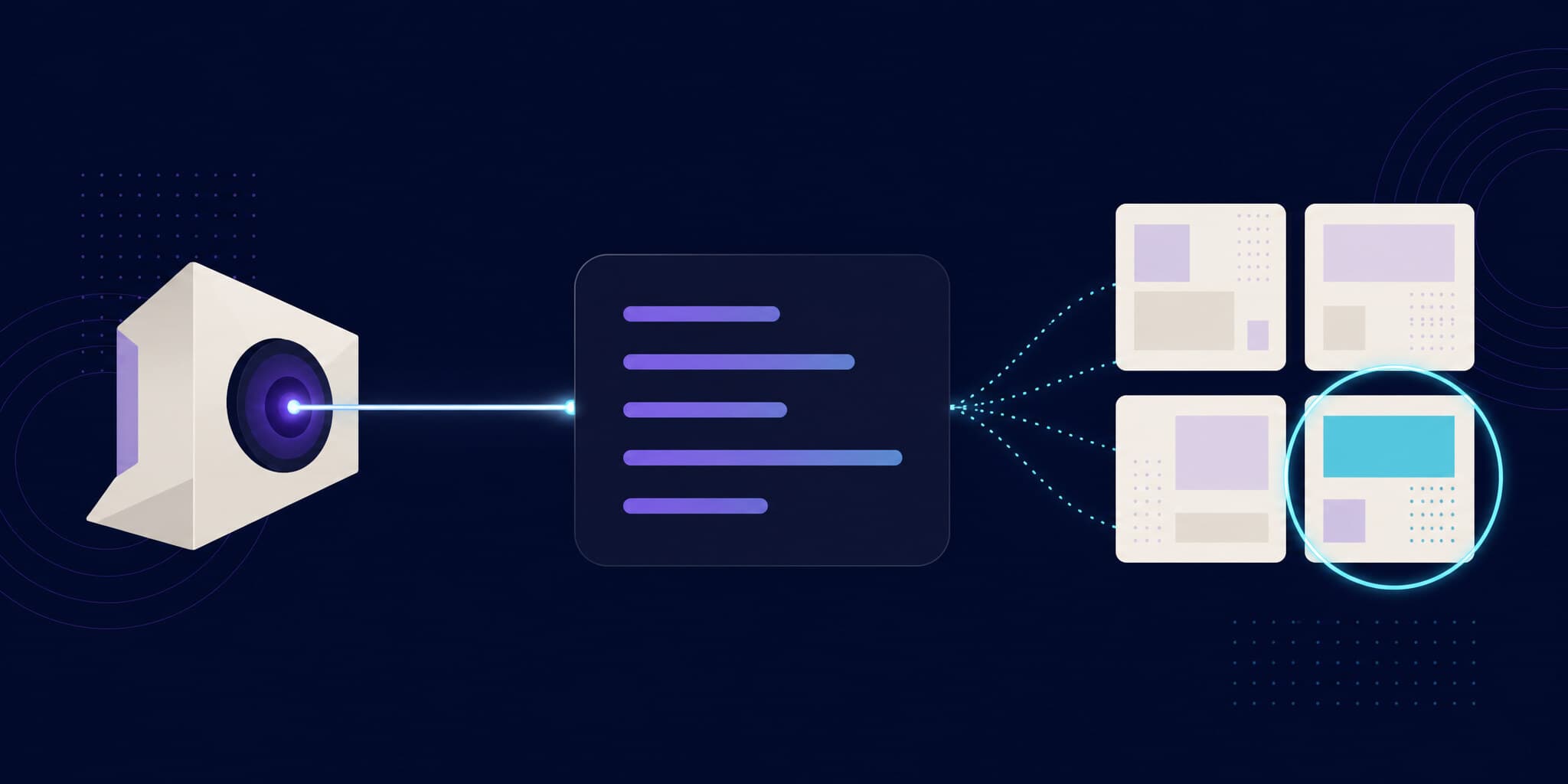
The fix is conceptually simple: put a camera in CI. Capture screenshots of your pages and components on every build, diff them against the baseline from your main branch, and surface any pixel change as a reviewable artifact on the PR.
With Argos, the capture happens locally, in the real browser your tests already run. One line in a Playwright test:
import { argosScreenshot } from "@argos-ci/playwright";

test("settings page", async ({ page }) => {
  await page.goto("/settings");
  await argosScreenshot(page, "settings-page");
});
Argos selects the baseline automatically from Git history and reports the result as a status check on the pull request. What matters for the agent era is what this does to the loop:
- The agent writes code and opens a PR.
- CI runs the test suite and captures screenshots along the way.
- Argos diffs every screenshot against the baseline and flags changes on the PR.
- Anyone, human or agent, can now answer the only question that matters: does the change on screen match the intent of the PR?
Step 4 is where it gets interesting, because "anyone" now includes the agent itself.
How does an agent inspect its own visual diffs?
Argos ships an agent-ready CLI and API: every command outputs structured JSON, so an agent can consume build results the same way it consumes compiler errors. The workflow, all shipped and documented as of July 2026:
# Fetch build status, branch, commit, and stats
argos build get <buildRef> --json

# Fetch only the snapshots that need a decision
argos build snapshots <buildRef> --needs-review --json

# Submit a review once the diffs are verified
argos review create <buildRef> --event approve
# or
argos review create <buildRef> --event reject
The --needs-review output includes the baseline URL, the new screenshot URL, and the diff mask for each changed snapshot, which is exactly the evidence an agent needs to reason about a visual change in context. Two open-source skills encode the whole workflow so you do not have to prompt it from scratch:
npx skills add argos-ci/argos-javascript@argos-cli
npx skills add argos-ci/argos-javascript@argos-pr-review
With the skills installed, the loop closes end to end. The agent that wrote the code opens the PR, waits for the Argos status check, pulls the diffs as JSON, compares them against the PR's intent, and either fixes its own regression and pushes again or submits an approval. A project token grants read access to build data; submitting a review requires a personal access token. There is even a Copy prompt button in the Argos build UI that generates an agent-optimized prompt for assistants without skill support.
If you want the full setup walkthrough with authentication details and prompt templates, we wrote a dedicated step-by-step guide: reviewing Argos builds with AI agents. This article is the why; that one is the how.
Why deterministic diffs matter more in the agent era, not less
There is a tempting counter-narrative: if AI is everywhere, why not let AI decide what changed visually too? Skip the pixel diff, have a vision model look at two screenshots and vibe-check them.
We think that gets the architecture backwards. Agents are probabilistic. Their verification layer should not be.
When a probabilistic author meets a probabilistic verifier, errors compound. An agent that hallucinates a layout fix, checked by a model that shrugs at a 12-pixel shift, produces a pipeline where nobody is sure of anything. The value of a deterministic diff is that it is ground truth: either pixels changed or they did not, and the same input produces the same answer every time. The agent's judgment then operates on reliable evidence ("the sidebar moved 12px on these 3 pages, does that match the PR intent?") instead of adding a second layer of guesswork.
Determinism is also what makes the diff trustworthy enough to automate around. It requires stable inputs, which is why Argos SDKs wait for fonts, images, and network idle and hide carets and scrollbars before capture (screenshot stabilization covers the details), and why capturing locally in your real test browser beats re-rendering in a separate cloud environment: what your test rendered is exactly what gets diffed, with no second rendering pass to introduce its own noise.
None of this means AI has no role in visual testing. It has exactly one right place: interpretation, on top of deterministic evidence, never instead of it. That division of labor is a topic of its own, which we dig into in AI visual testing.
The human stays in the loop, with better options
Agent-reviewed builds do not remove humans from the process; they change what humans spend attention on. In practice, teams converge on a spectrum:
- Agent as reporter. The agent summarizes visual changes on the PR; a human approves in Argos. Lowest trust required, still a big time saver.
- Agent as first reviewer. The agent approves obviously-intentional changes and escalates anything ambiguous. Humans only see the hard cases.
- Agent as self-healer. The agent that authored the PR inspects its own diffs and fixes regressions before a human ever looks. The visual test becomes part of the agent's inner loop, like a type checker for pixels.
Whichever level you choose, the prerequisite is the same: a visual testing layer on every PR, cheap enough to run on everything. Argos includes a free tier of 5,000 screenshots per month and a flat $100/month Pro plan with unlimited parallelization, so cost does not force you to ration coverage (see pricing). Setup takes a few minutes with any major framework; start with the getting started guide.
FAQ
Can AI coding agents verify their own UI changes?
Yes, as of 2026 this is a real, shipped workflow. With Argos, an agent uses the CLI (argos build get, argos build snapshots --needs-review --json) to fetch visual diffs as structured JSON, compares them against the pull request's intent, and can submit a review with argos review create. Open-source skills encode the full workflow for assistants like Claude Code.
Why aren't functional tests enough for AI-generated code?
Functional tests assert behavior, not appearance. Agent-written changes frequently modify shared CSS, DOM structure, or design tokens in ways that break layout on pages the agent never touched, while every behavioral assertion still passes. Visual testing is the only automated check that observes what actually renders.
Do I need a visual testing platform, or can the agent just take screenshots locally?
An agent can screenshot a page locally, but that gives you a single unmanaged image with nothing to compare it to. A platform provides Git-based baselines, deterministic diffing across the whole app, a PR status check, and a review trail that both humans and agents can act on. Committing baselines to Git, as with Playwright's native toHaveScreenshot, breaks down at scale for reasons we cover in Playwright visual testing limits.
Should the visual diff itself be AI-powered?
The diff should stay deterministic; AI belongs in the interpretation layer above it. A pixel diff gives the same answer for the same input every time, which is what makes it safe to build automation on. Let agents reason about whether a change is intentional, not about whether a change happened.
Conclusion
Coding agents changed who writes UI code, so something has to change about who verifies it. The old implicit contract, where the author of a change also looked at it in a browser, is gone. Deterministic visual testing on every PR restores it: screenshots become the agent's eyes, diffs become its feedback signal, and the human keeps a reviewable record of everything that changed on screen. Teams that wire this in now get the compounding benefit of agents that catch and fix their own visual regressions. Teams that don't will keep discovering them in production, one overlapped sidebar at a time.